
Protein Molecular Weight Markers

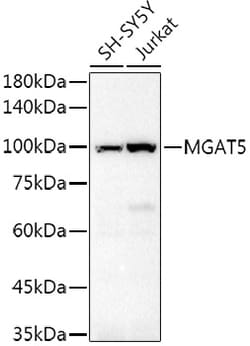
ABclonal Technology GNT-V/MGAT5 Rabbit pAb

The protein encoded by this gene belongs to the glycosyltransferase family. It catalyzes the addition of beta-1,6-N-acetylglucosamine to the alpha-linked mannose of biantennary N-linked oligosaccharides present on the newly synthesized glycoproteins. It is one of the most important enzymes involved in the regulation of the biosynthesis of glycoprotein oligosaccharides. Alterations of the oligosaccharides on cell surface glycoproteins cause significant changes in the adhesive or migratory behavior of a cell. Increase in the activity of this enzyme has been correlated with the progression of invasive malignancies.

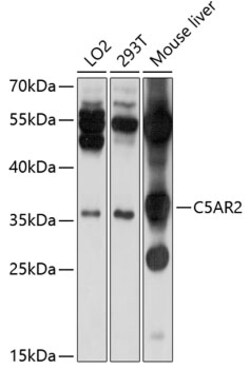
ABclonal Technology C5AR2 Rabbit pAb
This gene encodes a G-protein coupled receptor 1 family member involved in the complement system of the innate immune response. Unlike classical G-protein coupled receptors, the encoded protein does not associate with intracellular G-proteins. It may instead modulate signal transduction through the beta-arrestin pathway, and may alternatively act as a decoy receptor. This gene may be involved in coronary artery disease and in the pathogenesis of sepsis. Alternative splicing results in multiple transcript variants.

ABclonal Technology COPE Rabbit pAb
The product of this gene is an epsilon subunit of coatomer protein complex. Coatomer is a cytosolic protein complex that binds to dilysine motifs and reversibly associates with Golgi non-clathrin-coated vesicles. It is required for budding from Golgi membranes, and is essential for the retrograde Golgi-to-ER transport of dilysine-tagged proteins. Coatomer complex consists of at least the alpha, beta, beta, gamma, delta, epsilon and zeta subunits. Alternatively spliced transcript variants encoding different isoforms have been identified.
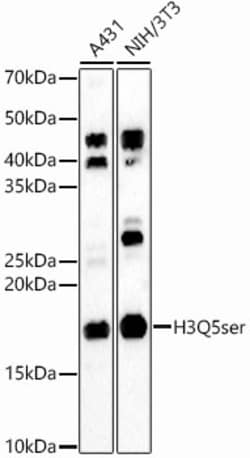
ABCLONAL SCIENCE INC H3Q5ser Rabbit pAb
Histones are basic nuclear proteins that are responsible for the nucleosome structure of the chromosomal fiber in eukaryotes. This structure consists of approximately 146 bp of DNA wrapped around a nucleosome, an octamer composed of pairs of each of the four core histones (H2A, H2B, H3, and H4). The chromatin fiber is further compacted through the interaction of a linker histone, H1, with the DNA between the nucleosomes to form higher order chromatin structures. This gene is intronless and encodes a replication-dependent histone that is a member of the histone H3 family. Transcripts from this gene lack polyA tails, instead, they contain a palindromic termination element. This gene is found in the large histone gene cluster on chromosome 6p22-p21.3.
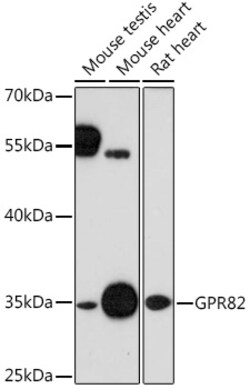
ABCLONAL SCIENCE INC GPR82 Rabbit pAb
The protein encoded by this gene is an orphan G protein-coupled receptor of unknown function. The encoded protein is a member of a family of proteins that contain seven transmembrane domains and transduce extracellular signals through heterotrimeric G proteins.
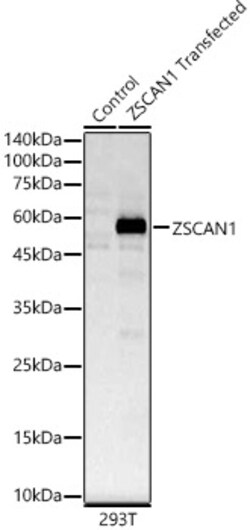
ABCLONAL SCIENCE INC ZSCAN1 Rabbit pAb
Enables sequence-specific double-stranded DNA binding activity. Predicted to be involved in regulation of transcription by RNA polymerase II. Predicted to be located in nucleus. Predicted to be part of chromatin.
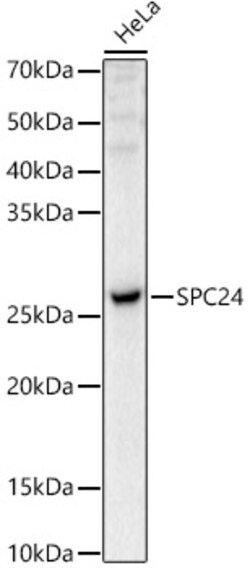
ABCLONAL SCIENCE INC SPC24 Rabbit pAb
Predicted to be involved in cell division. Located in nucleolus and nucleoplasm. Part of Ndc80 complex.
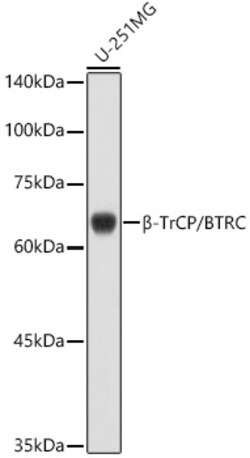
ABCLONAL SCIENCE INC β-TrCP/BTRC Rabbit pAb
This gene encodes an F-box protein, part of the F-box protein family, characterized by a 40 amino acid F-box motif. F-box proteins are subunits of the SCF (SKP1-cullin-F-box) complex, involved in phosphorylation-dependent ubiquitination. The F-box proteins are classified into three classes: Fbws, Fbls, and Fbxs. The protein encoded by this gene belongs to the Fbws class, containing both an F-box and multiple WD-40 repeats. It mediates CD4 degradation through interaction with HIV-1 Vpu and ubiquitinates phosphorylated NFKBIA, targeting it for degradation and activating nuclear factor kappa-B. Alternative splicing results in multiple transcript variants, and a related pseudogene exists on chromosome 6.
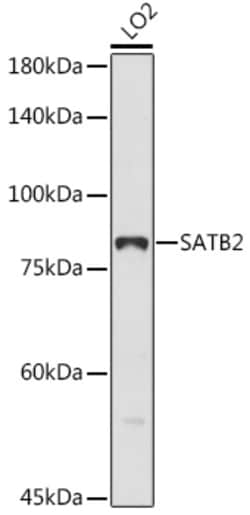
ABCLONAL SCIENCE INC SATB2 Rabbit pAb
This gene encodes a DNA binding protein that specifically binds nuclear matrix attachment regions. The encoded protein is involved in transcription regulation and chromatin remodeling. Defects in this gene are associated with isolated cleft palate and cognitive disability. Alternate splicing results in multiple transcript variants that encode the same protein.
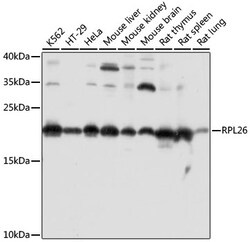
ABCLONAL SCIENCE INC RPL26 Rabbit pAb
Ribosomes, the organelles that catalyze protein synthesis, consist of a small 40S subunit and a large 60S subunit. Together these subunits are composed of 4 RNA species and approximately 80 structurally distinct proteins. This gene encodes a ribosomal protein that is a component of the 60S subunit. The protein belongs to the L24P family of ribosomal proteins. It is located in the cytoplasm. As is typical for genes encoding ribosomal proteins, there are multiple processed pseudogenes of this gene dispersed through the genome. Mutations in this gene result in Diamond-Blackfan anemia. Alternative splicing results in multiple transcript variants.
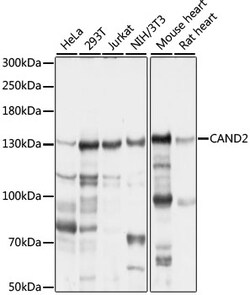
ABCLONAL SCIENCE INC CAND2 Rabbit pAb
Predicted to enable TBP-class protein binding activity. Predicted to be involved in SCF complex assembly, positive regulation of transcription, DNA-templated, and protein ubiquitination. Located in cytosol.
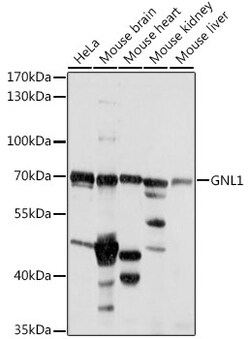
ABCLONAL SCIENCE INC GNL1 Rabbit pAb
The GNL1 gene, identified in the human major histocompatibility complex class I region, shows a high degree of similarity with its mouse counterpart. The GNL1 gene is located less than 2 kb centromeric to HLA-E, in the same transcriptional orientation. GNL1 is telomeric to HLA-B and HLA-C.
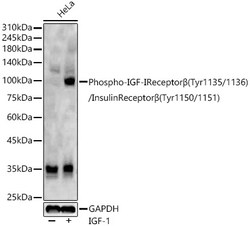
ABCLONAL SCIENCE INC Phospho-IGF-IReceptorβ(Tyr1135/1136)/InsulinReceptorβ(Tyr1150/1151) Rabbit pAb
This gene encodes a member of the receptor tyrosine kinase family. The preproprotein is processed into alpha and beta subunits that form a heterotetrameric receptor. Binding of insulin or other ligands activates the insulin signaling pathway, regulating glucose uptake, release, and the synthesis and storage of carbohydrates, lipids, and proteins. Mutations in this gene cause inherited severe insulin resistance syndromes, such as type A insulin resistance syndrome, Donohue syndrome, and Rabson-Mendenhall syndrome. The receptor also binds insulin-like growth factor and has tyrosine kinase activity. It plays a critical role in transformation events and is overexpressed in malignant tissues, acting as an anti-apoptotic agent. Alternative splicing produces multiple transcript variants encoding distinct isoforms.

ABCLONAL SCIENCE INC MLF2 Rabbit pAb
Predicted to be involved in regulation of transcription, DNA-templated. Located in membrane.
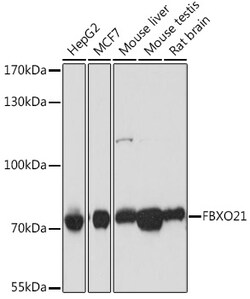
ABCLONAL SCIENCE INC FBXO21 Rabbit pAb
This gene encodes a member of the F-box protein family which is characterized by an approximately 40 amino acid motif, the F-box. The F-box proteins constitute one of the four subunits of ubiquitin protein ligase complex called SCFs (SKP1-cullin-F-box), which function in phosphorylation-dependent ubiquitination. The F-box proteins are divided into 3 classes Fbws containing WD-40 domains, Fbls containing leucine-rich repeats, and Fbxs containing either different protein-protein interaction modules or no recognizable motifs. The protein encoded by this gene belongs to the Fbxs class. Alternative splicing of this gene generates 2 transcript variants.